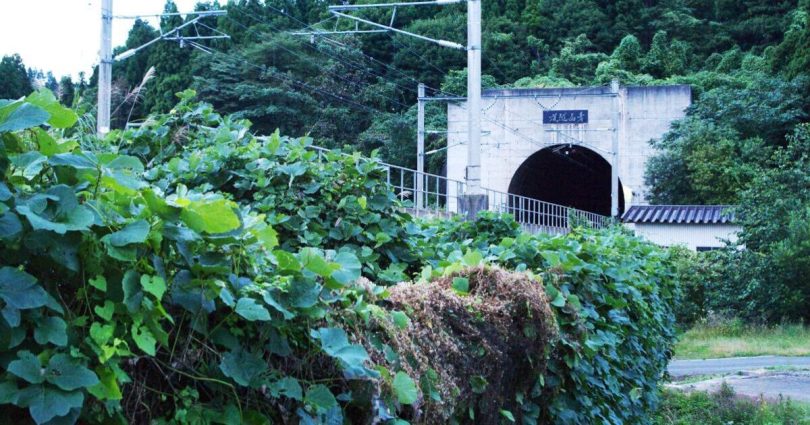

Japan spent billions, planned for decades, and took over fifteen years to connect its two largest islands by building the world’s longest tunnel with an underwater section. The Seikan Tunnel connects Honshu, the mainland of Japan, and Hokkaido, the northern island, and runs under the Tsugaru Strait.
It was first proposed in the late 1920s, and surveys to determine its feasibility began in the 1940s, but construction of this magnificent building did not truly begin until 1964. Construction was difficult because the surrounding region is prone to earthquakes and tsunamis, which required the tunnel to be drilled through volcanic rock and It also required engineering solutions capable of withstanding intense water pressure, resulting in many construction challenges, including flooding and collapses, that ultimately cost 34 workers their lives.
The tunnel finally opened on March 13, 1988, but cost ¥1.1 trillion (£5 billion) to construct, 12 times the original budget.
It measures 33.4 miles in length, with 14.5 miles of the tunnel drilled beneath the seabed, making it the world’s longest undersea tunnel.
At the time, the New York Times described Japan’s accomplishment as “a new era of underwater tunnelling is under way,” but in modern times, the tunnel has still faced a lot of difficulties.
When the tunnel was first planned, ferries were the primary means of travel between the islands, and the sinking of five ferries in 1954 helped set the project in motion.
However, by the time the tunnel was completed, air travel had become far more common and remains the main way people travel between Honshu and Hokkaido today.
It is usually cheaper to travel by plane than train, and the four-hour journey from Tokyo to Shin-Hakodate-Hokuto attracted fewer passengers than originally predicted.
Despite this, the Seikan Tunnel remains an incredibly impressive engineering feat and also features two station buildings and submarine tours for people to enjoy.
Around 50 trains pass through the tunnel each day, and it remains an important route for freight trains carrying food between the islands.
However, Japan has been planning more work on the bullet train tunnels, which currently need to slow down to avoid interfering with freight trains.
They are planning on expanding the bullet train network and upgrading the system by 2038.
Source link


