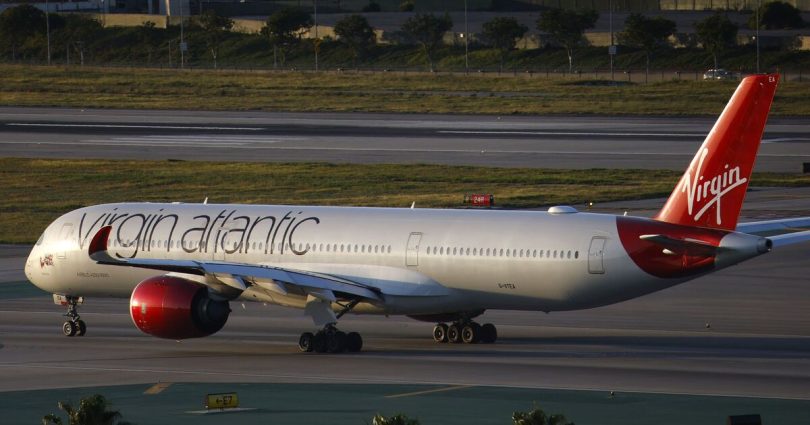

Virgin Atlantic’s chief executive has warned that the aviation sector “cannot absorb” jet‑fuel costs at their current levels, as rising fuel prices have pushed some airfares up by as much as £360. The warning follows the airline’s decision to increase fares as the conflict in Iran continues to threaten global jet‑fuel supplies.
It has introduced a fuel surcharge of £50 on economy tickets, £180 on premium economy and £360 on business‑class seats. Jet‑fuel prices have more than doubled since the start of the US‑Israel war with Iran, with the unrest disrupting production and blocking a key transport route in the Middle East.
Oil tankers are still encountering significant disruption along Strait of Hormuz, a situation that has helped drive crude prices sharply higher. Corneel Koster, Virgin Atlantic’s chief executive, said his expectations for a “much smoother” financial year have been upended by the impact of the conflict in Iran. He explained that jet‑fuel costs have reached unprecedented levels for the airline and warned that the industry cannot cope with price increases of this magnitude.
Mr Koster told The Telegraph: “I was looking at improving our financial results by a really significant chunk. And then this happens. We have never seen jet fuel at these levels, with prices more than doubling. The industry cannot absorb increases like this.”
On Friday, International Airlines Group (IAG) said the crisis in the Middle East, which has seen the closure of the Strait of Hormuz for weeks, is bound to increase the cost of flights to reflect higher jet fuel costs. British Airways (BA) is owned by International Airlines Group (IAG), a Spanish-registered company listed on the London and Spanish stock exchanges.
In a statement, it said: “We are not seeing jet fuel supply interruptions, but fuel prices have risen sharply and, despite our hedging strategy which gives some shorter term mitigation, we are not immune to the impact.
“Like other carriers, IAG airlines are making some pricing adjustments to reflect these higher fuel costs.”
“Our airlines will continue to monitor and respond to the situation and as long as these pressures continue, flexibility from government, including on slot alleviation, would ensure airlines can continue to operate as efficiently as possible and manage sustained cost challenges while keeping people and trade moving.”
Source link


