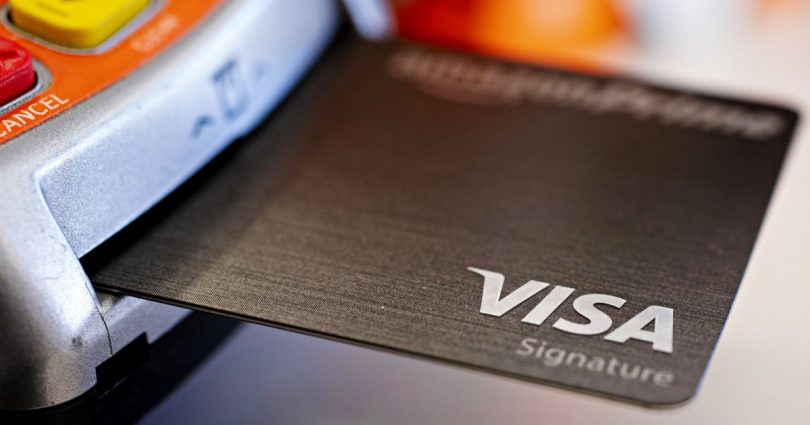

A decades-long drive to cap credit card interest rates has received a sudden jolt from President Donald Trump — and widespread pushback from banks.
Trump said Friday he wants to put a one-year 10% cap on the credit card rates, a move that has received support from Republican and Democratic politicians, some of whom have pushed legislation in recent years toward the same goal.
Consumer advocates have long pushed for some limitations on credit card rates with little success. Banks have argued that any caps would force them to limit credit availability.
It’s a point they have revisited in force in recent days.
“People will lose access to credit, like on a very, very extensive and broad basis, especially the people who need it the most, ironically,” Jeremy Barnum, chief financial officer at JPMorgan Chase, said in the bank’s earnings call Tuesday. Executives at Citi and Bank of America have echoed that sentiment.
Credit card interest rates have skyrocketed since 2022, according to Federal Reserve data, hitting an all-time high in the summer of 2024. Average credit card interest rates were at 19.65% as of Jan. 7, according to Bankrate’s tracking of weekly national average rates.
While interest rates have crept up, so have credit card bills. American consumers’ credit card balances totaled $1.23 trillion, according to Federal Reserve third quarter debt and credit data published in November.
Trump’s plans, at least for now, are unclear. Trump said in a post on Truth Social announcing his intended rate cap that “we will no longer let the American Public be ‘ripped off’ by Credit Card Companies that are charging Interest Rates of 20 to 30%.” He said his cap would go into effect Jan. 20 but did not relay how it would be implemented.
The Consumer Financial Protection Bureau’s main focus is to write and enforce federal consumer financial rules, including for credit cards. It’s the key agency that Trump would likely need to work with in order to get a rate cap implemented.
Some legislators have an idea. Sens. Bernie Sanders, I-Vt., and Josh Hawley, R-Mo., introduced a bill last February to cap interest rates at 10% until 2031. In a separate bipartisan effort in the House last year, Reps. Alexandria Ocasio-Cortez, D-N.Y., and Anna Paulina Luna, R-Fla., introduced a bill to cap rates at 10%.

On Monday, Hawley reopened his push for Congress to pass his and Sanders’ bill, saying, “President Trump is right: working Americans are drowning in record credit card debt while the biggest credit card issuers get richer and richer by hiking their interest rates to the moon.”
Sen. Elizabeth Warren, D-Mass., a longtime advocate of consumer protections for credit cards, told Trump on a phone call on Monday that Congress could pass the proposed cap “if he will actually fight for it,” according to a statement posted on X.
The president’s push comes as consumers are dealing with a multifaceted debt cycle between mortgage payments, student loans and credit cards.
For consumers already in credit card debt, Ted Rossman, a Bankrate senior industry analyst with a focus on credit cards, said this proposed cap is unlikely to do much for existing balances. Applying the change “retroactively would be a really sticky legal argument,” he said.
However, it could save consumers on future debt costs. According to a September report from Vanderbilt Policy Accelerator, savings could total $100 billion per year.
While this means consumers could save a large chunk of change, it also means creditors would lose out on major profit and likely adapt their business models.
“It’s sort of uncharted territory,” Rossman said. “My expectation is that access to credit would be slashed, especially for those with lower incomes and lower credit scores.”
Banks have continued to argue that any such cap would force their businesses to adjust.
“We’re all in for affordability,” Bank of America CEO Brian Moynihan said Wednesday on the bank’s earnings call. But with a rate cap “you will see unintended consequences of that,” he said, adding that people can expect “strict credit.”
On the other hand, some credit card lenders are already falling in line. Bilt, a rewards payment program for renters, announced Wednesday three new credit cards with interest rates of 10% for one year — matching the president’s proposed cap.
While a rate cap could eat into traditional creditors’ bottom lines, newer and less-regulated credit alternatives could get a boost.
The American Bankers Association, alongside other banking groups, warned about these potential replacements in a statement Friday, saying that “if enacted, this cap would only drive consumers toward less regulated, more costly alternatives.”
One of these potential alternative options is buy now, pay later. This relatively newer payment form typically lets buyers obtain a small, interest-free loan that gets paid back in increments over a set time frame. Although interest charges aren’t common, most charge fees for late payments.
“This could turbocharge their growth if they became the leading alternative for people,” Rossman said.
Although BNPL is less regulated than traditional credit cards, the CFPB issued an “interpretive rule” in May 2024 saying BNPL lenders “are credit card providers.”
“Because Buy Now, Pay Later lenders will typically meet criteria under existing law and regulation as traditional credit card providers, they need to extend many of the same rights and protections as classic credit card providers,” the statement said.
It’s unclear if a credit card rate cap would have an impact on BNPL options, too.
Banks with a more diversified business portfolio would fare better with a rate cap compared with companies that are more “heavily reliant” on the credit card business, Rossman said.
This has already partly played out on the stock market. Following Trump’s Friday evening announcement, Capital One’s stock dropped in Monday trading.
Source link