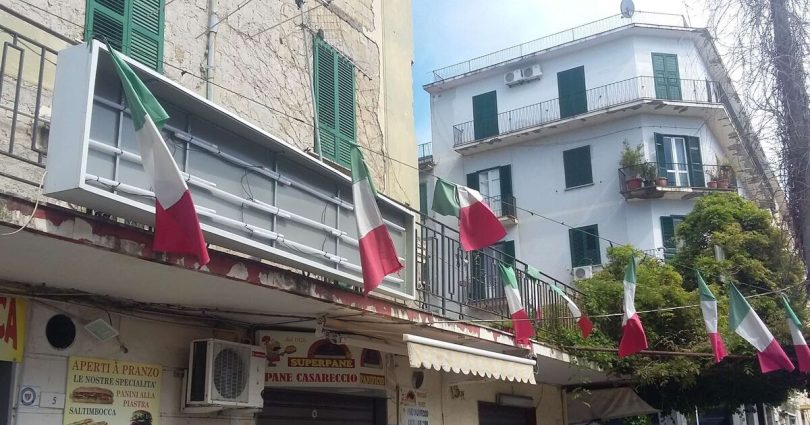

Visiting Italy always enchants me, with its old buildings and streets, many of which have remained largely unchanged for centuries. Then there are the stunning views, whether you’re looking out over the countryside, the sea, or even volcanoes; Italy really has it all — and, of course, there’s also the delicious food.
While on holiday in Sorrento, it was easy to take a train to several other Italian places, and one train station called Ercolano Scavi was where I alighted to visit an eerie yet fascinating place. The train runs towards Naples, from Sorrento, and somewhere in between lies Herculaneum (modern name: Ercolano), a place where a horrific event preserved a huge piece of history. Some 2,000 years ago, Herculaneum was a luxurious and rich city, but in the year 79 AD, the Mount Vesuvius volcano that overlooks this area erupted, and fast-flowing lava covered the ancient Roman city.
Mount Vesuvius is a foreboding sight in this part of Italy, visible from Sorrento and Naples, but looming above Ercolano, which really encapsulates the feeling of doom and destruction the volcano could cause, even today.
The last eruption was on March 17, 1944, and 26 civilians died, so visiting this part of Italy has an eerie vibe, although trips and hikes to the top of Mount Vesuvius are offered to tourists.
I stayed below the volcano to focus on exploring Herculaneum, where 2,000 years ago, volcanic ash and rock covered everything — and everyone alive at the time.
But despite the fear and tragedy that struck at that time — and can be felt as you wander around the now uncovered and preserved streets and buildings of Herculaneum — it was the volcanic lava that preserved this Roman city.
From drinking troughs to mosaics, walls and statues, even bread in ancient stone ovens, it was fascinating to see how creative and systematic the people who lived here were at the time.
The mosaics and murals were so detailed and colourful, I observed that this ancient civilisation took pride in their surroundings, which arguably may not always be the case in modern times.
It was a few years ago that I visited Herculaneum, and since then, archaeologists have uncovered more of the ancient Roman city, including skeletal remains.
A recent Google reviewer wrote about what they saw: “What a brilliant place, so well preserved, fascinating architecture and history.
“Seeing the bodies of the poor souls who got trapped is quite a distressing thing to witness, completely different from the disconnect of a picture online, you can, unfortunately, see the terror in their faces.
“Sad part aside, a brilliant place to explore and learn from, the boat they recovered is amazing, as are all of the personal effects going within the town.”
Another recent Google review reads: “Herculaneum is absolutely mind-blowing. Smaller and less crowded than Pompeii, but in many ways even more impressive. The level of preservation here is unreal — second stories still standing, wooden doors, roof beams, furniture, even food remnants. It’s like the eruption happened yesterday.
“We did a private tour with an archaeologist who helped bring it all to life — explaining how this seaside town functioned before the eruption and why it was preserved so differently from Pompeii. The contrast between the two sites is fascinating.
“It’s more compact than Pompeii, but every corner is packed with detail and history. And the best part — it’s not swarming with tourists, so you can really take your time and soak it all in.
“Don’t skip this one, Herculaneum is a must. Quiet, powerful, and unforgettable.”
Source link